Introduction
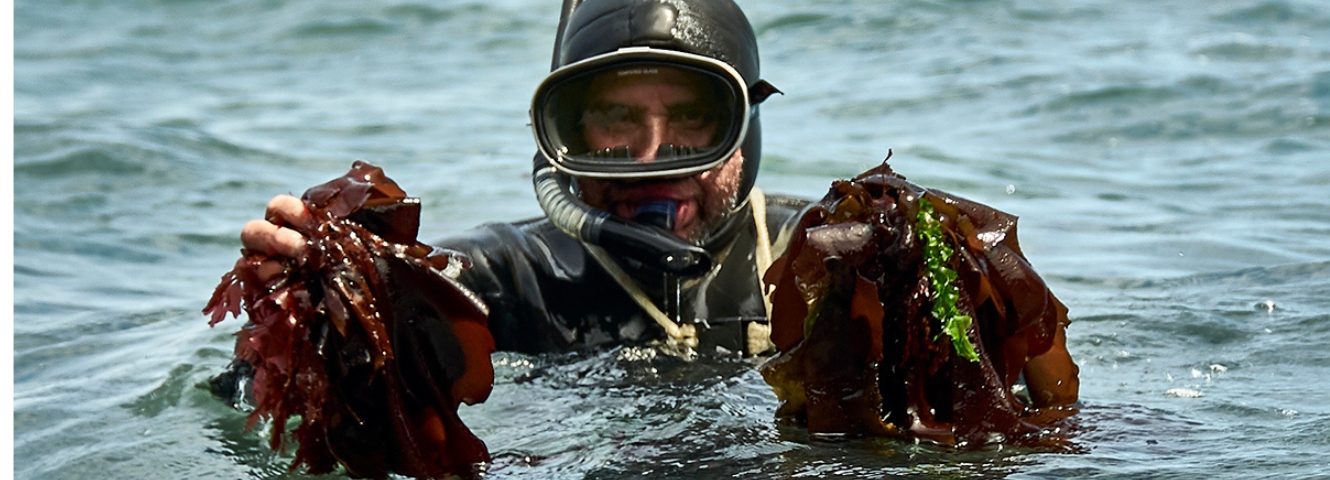
Since time immemorial, the peoples who inhabited the coasts of Chile learned to read the sea with a wisdom that science confirms today. The marine algae that carpet the rocks and seabeds of the South Pacific were much more than scenery: they were food, medicine, currency, and a symbol of identity. This document gathers evidence published by serious sources—archaeological, academic, institutional, and regulatory—on the historical consumption of seaweed in Chile, its role in local culture, its nutritional benefits, its food safety, and its importance as an economic livelihood for current coastal communities. Special attention is given to the red and brown algae that are the raw materials for Carrageenan and alginate, and to the three species of red algae that motivate this study: Chondracanthus chamissoi, Sarcothalia crispata, and the genus Chondrus. Every statement is accompanied by its source, and matters open to scientific debate are presented transparently.
1. Fourteen Thousand Years of History at the Table
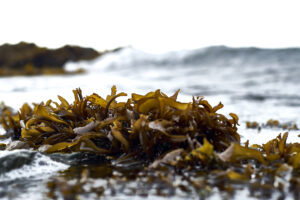
The world’s oldest record of human consumption of marine algae is not found in Japan or Norway: it is found in Chile. At the archaeological site of Monte Verde, in the Los Lagos Region near Puerto Montt, the team led by archaeologist Tom Dillehay identified remains of nine seaweed species dating back around 14,500 years before the present, evidence published in the journal Science in 2008. Since Monte Verde is located about ninety kilometers from the current coastline, the algae were deliberately transported from the Pacific to the interior: they were not a food of opportunity, but a valued, sought-after, and preserved resource.[1]
Among the identified species were cochayuyo (Durvillaea antarctica), luche (Porphyra), pelillo (Gracilaria), and huiro (Lessonia), along with black luga (Sarcothalia crispata)—one of the first algae consumed in Chilean territory. It should be noted that the dating of Monte Verde was the subject of a debate reactivated in 2025; however, the Pleistocene antiquity of nearly 14,500 years remains the majority position.[2]
This finding supports archaeologist Jon Erlandson’s “Kelp Highway Hypothesis” according to which the first settlers of the Americas would have advanced along the Pacific coastline, taking advantage of dense kelp forests as a source of food and resources.[3] Colonial chroniclers later described how native populations consumed primarily cochayuyo and, to a lesser extent, luche. Although traditional consumption was displaced by foreign ingredients during the Colonial period, today there is a renaissance of this ancestral practice.[4]
2. The Knowledge of Coastal Peoples
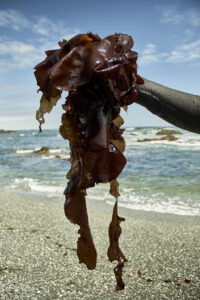
Long before biochemistry had a name, indigenous peoples built systematic knowledge about seaweed. The Mapuche people and their coastal branch, the Lafkenche (“the people of the sea”), developed their own vocabulary: cochayuyo was kollof; luche was lluke; luga was luge. The kollof, with its fleshy and resistant stem, was cooked, sun-dried, and transported inland, where it was traded with the Pehuenche communities of the Andes mountains for pine nuts and jerky (charqui): seaweed was, literally, a currency in the pre-colonial economy of southern Chile.[5]
Traditional preparations have survived to this day: cochayuyo stew (cazuela) with potatoes and squash, fried luche on the coast of the Gulf of Arauco and Chiloé, charquicán with pieces of seaweed, and kollof salad. In Chiloé, the Huilliche communities incorporated luche into breads and tortillas, pelillo into natural gelatins, and large huiro fronds as wrappers for the curanto.[6]
Further south, in the Patagonian channels, the Kawésqar and the Yaganes—nomads of the southern sea—gathered seaweed from tide pools and wrapped the food they cooked on hot stones with kelp; ethnologist Martin Gusinde recorded this use in the 1920s. In the arid north, the Chango people collected black huiro and red rock algae. This heritage is recognized today by the Chilean State through the Lafkenche Law (Law No. 20.249 of 2008), which created the Marine Coastal Spaces of Indigenous Peoples to guarantee traditional access to these resources.[7]
In the southern regions, the consumption of cochayuyo and luche remains active as part of the local culinary culture. Cochayuyo is also featured in the Ark of Taste, a catalog of Chilean food heritage, and the Cochayuyo Route—in which Lafkenche families from the Biobío Region travel by oxcart from the coast to the Araucanía—is inscribed in Chile’s Registry of Intangible Cultural Heritage.[8]
3. The Seaweeds Chile Offers the World
Chile has a coastline of more than 6,000 kilometers bathed by the cold, oxygenated waters of the Humboldt Current, one of the most productive oceanic systems on the planet, where over 700 species of macroalgae have been recorded. Several of them stand out for their dietary and industrial value.
Cochayuyo (Durvillaea antarctica) is the country’s most iconic seaweed; it provides vitamins A, B1, B12, and C, along with minerals such as iodine, calcium, and iron. Luche (Pyropia / Porphyra columbina) is the most consumed red algae, related to Japanese nori and notable for its high protein content. Pelillo (Gracilaria chilensis) made Chile one of the world’s leading producers of agar-agar and was the country’s first successful macroalgae aquaculture model. Huiro (Macrocystis pyrifera, Lessonia spp.) forms underwater kelp forests that provide habitat and food for hundreds of marine species.
Chondracanthus chamissoi (Sea chicoria, Yuyo, or Mococho)
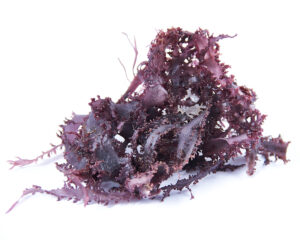
It is perhaps the most highly valued seaweed in direct gastronomy in northern and central Chile: it is sold fresh in the markets of Iquique, Antofagasta, Coquimbo, and Valparaíso and used in salads, ceviches, and as a seafood garnish. It is also exported dehydrated to Asian markets for human consumption and is one of the main sources of carrageenan in the country.[9]
Sarcothalia crispata (Black Luga)
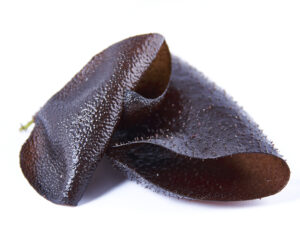
It is one of Chile’s most important algal resources, exploited for decades in the Biobío and Los Lagos regions. According to the official Subpesca fact sheet, it is an endemic carrageenophyte species distributed between Valparaíso and Tierra del Fuego, whose fronds primarily produce kappa-carrageenan and which is commercialized as dry algae and for carrageenan extraction.[10]
Chondrus (Luga / “Irish Moss”)
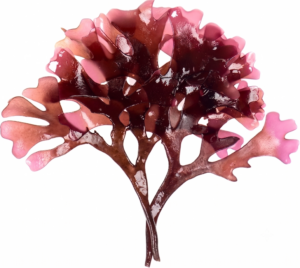
Chondrus crispus or “Irish moss” has been harvested for centuries in the North Atlantic and consumed as a natural gelling agent in traditional desserts like carrageen pudding; in fact, it gave its name to carrageenan.[11] The species historically classified in Chile as Chondrus canaliculatus was reclassified in 2021 as Mazzaella canaliculata; it shares with the group its condition as a carrageenan-producing red algae.[12]
4. Carrageenan and Alginate: The Contribution of Chilean Seaweed to Industry
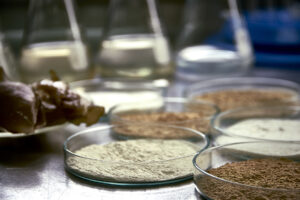
Many of the same species that have been part of the historical Chilean diet are today the raw material for two of the most widely used functional ingredients in the global food industry: carrageenan and alginate. Both are completely natural hydrocolloids, obtained from seaweed through controlled physical and chemical processes; they are not synthetic additives, but the industrial expression of what nature produces in the algae.
Carrageenan is a polysaccharide extracted mainly from red algae such as black luga (Sarcothalia crispata), red luga (Gigartina skottsbergii), and sea chicory (Chondracanthus chamissoi), which grow abundantly in the southern channels and on the northern and central coast of Chile.[13] It is used as a gelling agent, thickener, and stabilizer in dairy products, ice creams, sausages, sauces, beverages, and bakery products, as well as in pharmaceutical and cosmetic applications.
Alginate is extracted from brown algae, especially huiro palo (Lessonia trabeculata) and black huiro (Lessonia nigrescens / Macrocystis pyrifera), and represents between 18% and 40% of the dry biomass of these algae. It fulfills similar functions in the food and pharmaceutical industries, and even in 3D food printing and medical wound dressings.[14]
Both compounds are classified as safe for human consumption by the world’s leading regulatory authorities—the US FDA,[15] the European EFSA,[16] and the FAO/WHO JECFA, which assigned food-grade carrageenan a “not specified” acceptable daily intake (ADI), the most favorable category.[17] It is worth noting two nuances that reinforce the credibility of the message: the EFSA maintains its ADI on a temporary basis pending further data, and food-grade carrageenan—stable and of high molecular weight—must be distinguished from “poligeenan” or degraded carrageenan, which is not a food nor is it permitted in food.
5. Sustenance of Coastal Communities
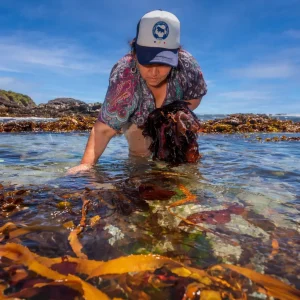
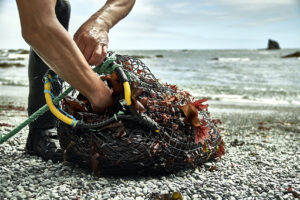
The extraction and processing of seaweed in Chile constitute an industry of economic and social relevance that dates back decades. Processing plants located in the Coquimbo, Valparaíso, Los Ríos, and Los Lagos regions provide direct and indirect sustenance to thousands of families of artisanal fishers and shore gatherers. For many coastal communities in the south, the harvesting of luga, black huiro, and huiro palo is not a complementary activity: it is the economic axis of their daily lives, and the knowledge about their harvest and processing is transmitted from generation to generation as productive heritage.[18]
This activity rests on a formal category of Chilean artisanal fishing: the shore gatherers—among whom women seaweed gatherers (algueras) stand out very importantly—registered in Sernapesca’s Artisanal Fishing Registry.[19] Chile is, in fact, the world’s leading wild seaweed harvester, with a production exceeding 400,000 tons annually, and is positioned as one of the world’s largest producers of phycocolloids.[20] Globally, more than 30 million tons of macroalgae are produced each year, destined for both direct human consumption and the extraction of hydrocolloids, confirming that algae are a resource of dual value: food and industrial.[21]
6. An Extraordinarily Nutritious Food
The FAO recognizes that seaweed provides minerals—iron, calcium, iodine, potassium, selenium—and vitamins (A, C, and B12); it is one of the few non-fish sources of long-chain omega-3 fatty acids, is rich in soluble dietary fiber, and some species are good sources of protein.[22]
Studies on Chilean species confirm this profile. Luche (Porphyra) stands out for its nutritional density—with analyses reporting around 31 g of protein and about 40 g of fiber per 100 g of dry algae—[23] and is among the rare plant sources of biologically active vitamin B12.[24] A 2023 scientific review (Guerrero-Wyss et al.) documented that cochayuyo (Durvillaea antarctica) can reach a total dietary fiber close to 71% of its dry weight—one of the highest recorded in a plant food—and described the role of fucoidan, a sulfated polysaccharide from brown algae that modulates the immune response and helps regulate glucose and cholesterol.[25]
Recent Chilean research, several from the University of Concepción, has documented additional functional properties: extracts of Durvillaea incurvata showed a potent inhibition of the enzyme α-glucosidase—related to blood sugar regulation—in laboratory trials,[26] and polysaccharides from Durvillaea antarctica exhibited antioxidant capacity and in vitro antitumor activity. These results are promising, although they correspond to preliminary studies and do not constitute, by themselves, claims of clinical efficacy in humans.[27]
7. Seaweed from Clean Seas: Safety and Naturalness
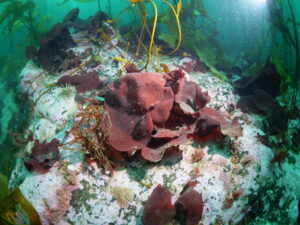
The coastal waters of Chile, especially in the south and extreme south, are among the least polluted in the world. The Humboldt Current provides cold waters, rich in oxygen and natural nutrients, far from the large industrial hubs of the Northern Hemisphere. The algae that grow there do so in a genuinely natural environment—without pesticides, herbicides, or transgenic manipulation—obtaining their nutrients directly from the sea.
Evidence backs up this safety in concrete ways. A study published in Food and Chemical Toxicology analyzed fourteen species of Chilean seaweed and concluded that cochayuyo (Durvillaea antarctica), intended for direct human consumption, did not present levels of inorganic arsenic that posed a risk to the consumer.[28] Added to this is official control: Sernapesca operates a sanitary certification system with specific requirements for algae intended for human consumption throughout the entire supply chain,[29] and the Sanitary Food Regulation (Decree No. 977/1996) regulates its commercialization as food. It is, therefore, a food with a double guarantee: that of nature, which produces it in clean waters, and that of the State, which oversees its harvesting and processing.[30]
Conclusion: A Unique Resource — Food, Health, Culture, and Sustenance
The marine algae of Chile gather a rare combination of attributes. They are an ancient food, with more than fourteen thousand years of documented consumption in the territory itself. They are a natural food of exceptional nutritional density—protein, fiber, minerals, omega-3s, and bioactive compounds—that science continues to characterize. They are the foundation of safe and natural hydrocolloids, carrageenan and alginate, endorsed by the FDA, EFSA, and JECFA/Codex. And they are the economic sustenance of coastal communities that have cared for the sea for generations. Harvested mostly from natural meadows of the South Pacific, they are foods whose safety is backed by scientific and institutional evidence. Perhaps the most valuable thing is this: the same seaweed that grandparents consumed in a salad today sustains the economy of their fishing neighbors.
————————————————————
Bibliography
[1]Dillehay, T. D., Ramírez, C., Pino, M., Collins, M. B., Rossen, J. & Pino-Navarro, J. D. (2008). “Monte Verde: Seaweed, Food, Medicine, and the Peopling of South America”. Science 320(5877): 784–786. DOI 10.1126/science.1156533. https://pubmed.ncbi.nlm.nih.gov/18467586/
[2]Debate de datación reactivado en 2025 (Surovell et al. y refutación de Dillehay et al., Science). La antigüedad pleistocena de ~14.500 años sigue siendo la posición mayoritaria. https://www.science.org/doi/10.1126/science.adw9217
[3]Erlandson, J. M. et al. (2007). “The Kelp Highway Hypothesis: Marine Ecology, the Coastal Migration Theory, and the Peopling of the Americas”. The Journal of Island and Coastal Archaeology 2(2): 161–174.
[4]Memoria Chilena, Biblioteca Nacional de Chile. “Cocina mestiza”. https://www.memoriachilena.gob.cl/602/w3-article-92894.html
[5]Subdirección Nacional de Pueblos Originarios, Gobierno de Chile. “Patrimonio Alimentario Lafkenche: recolección y preparación de coyofe y luche”. https://www.pueblosoriginarios.gob.cl/multimedia/patrimonio-alimentario-lafkenche-recoleccion-y-preparacion-de-coyofe-y-luche
[7]Ley N° 20.249 que crea el Espacio Costero Marino de los Pueblos Originarios (“Ley Lafkenche”), publicada el 16 de febrero de 2008. Biblioteca del Congreso Nacional de Chile. https://www.bcn.cl/leychile/navegar?idNorma=269291
[8]Ministerio de las Culturas, las Artes y el Patrimonio de Chile. “La Ruta del Cochayuyo”, Registro de Patrimonio Cultural Inmaterial. https://www.patrimonioinmaterial.gob.cl/publicaciones/la-ruta-del-cochayuyo
[9]Arakaki, N. et al. (2021). Chondracanthus chamissoi: biología, ecología y acuicultura. Journal of the World Aquaculture Society (Wiley). https://onlinelibrary.wiley.com/doi/full/10.1111/jwas.12849
[10]Subsecretaría de Pesca y Acuicultura (Subpesca). Ficha del recurso “Luga negra” (Sarcothalia crispata). https://www.subpesca.cl/portal/616/w3-article-848.html
[11]Encyclopædia Britannica, “Irish moss” (Chondrus crispus); Smithsonian Magazine, “A Brief History of Ireland’s Carrageen Moss Pudding”. https://www.britannica.com/science/Irish-moss
[12]Arakaki, N. & Ramírez, M. E. (2021). “Mazzaella canaliculata comb. nov. based on Chondrus canaliculatus”. Phytotaxa 497(3). https://www.biotaxa.org/Phytotaxa/article/view/phytotaxa.497.3.2
[13]FAO. “Seaweeds used as a source of carrageenan” y A guide to the seaweed industry (FAO Fisheries Technical Paper 441, McHugh 2003). https://www.fao.org/4/y4765e/y4765e09.htm
[14]FAO. “Seaweeds used as a source of alginate” (FAO Fisheries Technical Paper 441). El alginato representa entre el 18% y el 40% de la biomasa seca de las algas pardas. https://www.fao.org/4/y4765e/y4765e07.htm
[15]U.S. FDA, 21 CFR 172.620 — Carrageenan (aditivo alimentario directo autorizado). https://www.ecfr.gov/current/title-21/chapter-I/subchapter-B/part-172/subpart-G/section-172.620
[16]EFSA ANS Panel (2018). “Re-evaluation of carrageenan (E 407) and processed Eucheuma seaweed (E 407a) as food additives”. EFSA Journal 16(4):5238. La IDA grupal de 75 mg/kg pc/día fue considerada temporal. https://efsa.onlinelibrary.wiley.com/doi/10.2903/j.efsa.2018.5238
[17]JECFA (Comité Mixto FAO/OMS de Expertos en Aditivos Alimentarios). Carragenina grado alimentario: IDA “no especificada”. Codex Alimentarius, INS 407 (CODEX STAN 192-1995). https://www.fao.org/gsfaonline/additives/details.html?id=49
[18]Documento corporativo Gelymar, “El Mar que nos Alimenta” (síntesis de fuentes históricas y etnográficas, incluido el registro del etnólogo Martin Gusinde sobre los yaganes).
[19]Servicio Nacional de Pesca y Acuicultura (Sernapesca). Registro Pesquero Artesanal — categoría Recolectores de Orilla. https://www.sernapesca.cl/informacion-utilidad/inscribirse-en-el-registro-pesquero-artesanal-rpa/
[20]The Nature Conservancy Chile. “La oportunidad de la acuicultura de algas para el desarrollo sostenible” (cifras de IFOP/Subpesca). https://www.nature.org/es-us/sobre-tnc/donde-trabajamos/tnc-en-latinoamerica/chile/historias-en-chile/oportunidad-acuicultura-algas-desarrollo-sostenible/
[21]FAO (2018). Capítulo 4.4 “Seaweeds”, The State of World Fisheries and Aquaculture. https://openknowledge.fao.org/server/api/core/bitstreams/0aa558d4-57c7-498d-87f7-b9e37577882f/content/src/html/chapter-4.4.html
[23]“Composición química y calidad proteica de fideos complementados con harina de Porphyra columbina”. Revista DIAETA (SciELO). http://www.scielo.org.ar/scielo.php?script=sci_arttext&pid=S1852-73372019000200002
[24]Cao, J. et al. (2016). “Porphyra Species: A Mini-Review of Its Pharmacological and Nutritional Properties”. Journal of Medicinal Food. https://journals.sagepub.com/doi/full/10.1089/jmf.2015.3426
[25]Guerrero-Wyss, M. et al. (2023). “Durvillaea antarctica: A Seaweed for Enhancing Immune and Cardiometabolic Health and Gut Microbiota Composition Modulation”. Int. J. Mol. Sci. 24(13):10779. Reporta fibra dietaria de hasta ~71% del peso seco y efectos del fucoidano. https://www.mdpi.com/1422-0067/24/13/10779
[26]Estudio de la Universidad de Concepción sobre florotaninos e inhibición de α-glucosidasa en Durvillaea incurvata. Foods (2023) 12(18):3326. https://www.mdpi.com/2304-8158/12/18/3326
[27]Estudio sobre actividad antitumoral y antioxidante de polisacáridos de Durvillaea antarctica, Universidad de Concepción. Chemical Biology & Drug Design (2024), DOI 10.1111/cbdd.14392. https://pubmed.ncbi.nlm.nih.gov/37945521/
[28]Muñoz, O. et al. (2011/2012). Arsénico en algas chilenas de importancia económica. Food and Chemical Toxicology (Elsevier), PMID 22138359. https://pubmed.ncbi.nlm.nih.gov/22138359/
[29]Sernapesca. Manual de Inocuidad y Certificación; certificación sanitaria de algas para consumo humano. https://www.sernapesca.cl/manuales_y_publicaciones/manual-de-inocuidad-y-certificacion/
[30]Reglamento Sanitario de los Alimentos, Decreto N° 977/1996 (Ministerio de Salud de Chile). https://www.bcn.cl/leychile/navegar?idNorma=71271